

(+91) 97260 97222
We are open 9 AM - 6 PM
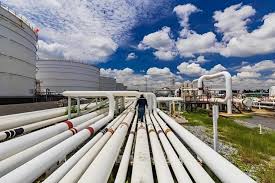
Fabrication & Erection of CS, MS Pipes
Project Overview and Purpose
The fabrication and erection of Carbon Steel (CS) and Mild Steel (MS) piping systems are critical components in various industrial sectors such as oil and gas, power plants, petrochemical units, and water treatment facilities. The main objective of this work is to provide a complete and robust piping network that supports the safe and efficient transportation of process fluids under varying temperature and pressure conditions. The project scope involves end-to-end activities—ranging from raw material handling, fabrication of pipe spools, inspection, and testing, to the final erection at site and commissioning. These works are executed in compliance with applicable codes, project specifications, and strict quality and safety standards.
Fabrication of CS/MS Piping
The fabrication phase begins with the review of approved isometric drawings, bill of materials, and project technical specifications. Raw pipes and fittings are identified and prepared as per the required dimensions. The key fabrication activities include pipe cutting, edge preparation, beveling, and fit-up of straight lengths and fittings such as elbows, reducers, tees, and flanges. Welding operations are carried out using approved Welding Procedure Specifications (WPS), with only certified welders assigned to the job. Different welding processes like SMAW, GTAW, or MIG are used based on material thickness and joint configuration. After each weld, Non-Destructive Testing (NDT) methods such as Radiographic Testing (RT), Ultrasonic Testing (UT), and Dye Penetrant Testing (DPT) are conducted to confirm weld integrity and detect any flaws. Dimensional inspection ensures compliance with tolerance limits. All fabricated spools are tagged, numbered, and recorded with traceability logs. Once inspected and approved, the spools are sent to the site for erection.
Erection, Testing & Quality Control
At the erection site, the CS/MS spools are carefully unloaded, stored, and prepared for installation following the alignment plan and isometric layouts. The erection process includes pipe positioning, alignment, support installation, field welding, and flange bolting. Precision is maintained during alignment to ensure slope, orientation, and clearances are as per design. Erection activities are executed using cranes, chain blocks, rigging tools, and scaffolding wherever required. After assembly, the piping system undergoes pressure integrity tests—either hydrostatic or pneumatic—based on the service and pressure rating. Flushing and cleaning of the pipelines are carried out to remove debris or foreign particles before commissioning. All activities are tracked and verified through detailed QA/QC procedures including weld logs, material traceability, and inspection records. Safety remains a top priority during erection, with proper PPE usage, permit-to-work systems, lifting plans, confined space entry protocols, and daily toolbox talks implemented without exception. The final deliverable is a fully erected and tested CS/MS piping system, ready for operational use and handed over with complete documentation such as as-built drawings, test certificates, and inspection dossiers.

M/s Shreya Enterprises was founded by Mr. Rajeev Kumar Tiwari during the year 2016. The company has grown by its strength, mainly manpower and its rich experience. We are successful in earning and maintaining good will in all our areas of operation on account of our sincerity in dealings, quality consciousness of our men and our enthusiasm to deliver goods & services in time.
 335, 3rd Floor, Shilpi Square, Opp. Nagori Dairy Bypass Road Bharuch, Dist. Bharuch, Gujarat 392001(India)

